First structural engineering manual for bamboo could boost sustainable construction
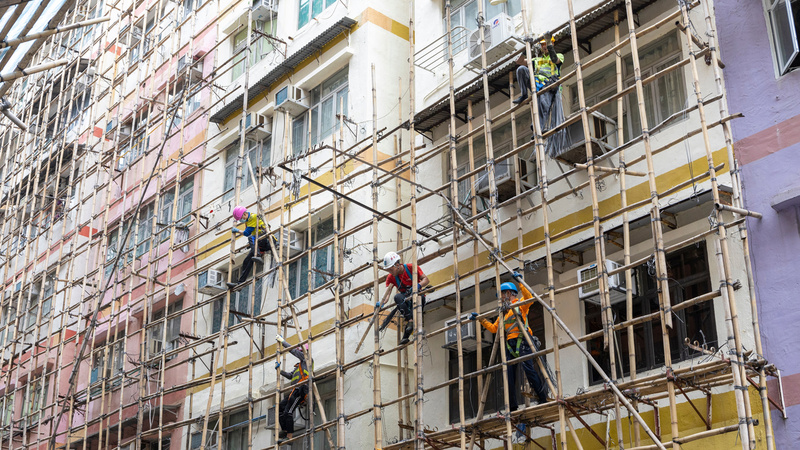
The Institution of Structural Engineers (IStructE) has released comprehensive guidance about the design of permanent bamboo structures for the first time.
Bamboo has been used in traditional construction for centuries in countries such as China, Indonesia, Colombia and Vietnam. But it has seen renewed interest as a key material in modern buildings as engineers and architects look for lower-carbon alternatives to steel, concrete and timber.
Bamboo is a fast-growing grass that can be harvested in three to five years and regrows without replanting, absorbing large amounts of carbon dioxide as it grows. Structurally, it has a high strength-to-weight ratio, comparable to steel in tension, while requiring far less energy to process than concrete or metals.
The detailed design manual from IStructE draws on the expertise of four international authors from academia and industry and aims to help structural engineers understand how the material can be used safely, with the ISO standard and the manual limited to two storeys because of fire concerns.
Lead author Dr David Trujillo from the University of Warwick said: “This manual marks a significant milestone for the safe use of bamboo for permanent structures. Most structural design codes are developed in higher-income countries to address their own needs. Only later are they adopted or adapted by lower- and middle-income countries – but the starting point is never the needs of those regions.”
Professor Kent Harries, University of Pittsburgh, adds: “There are some 1,600 known species of bamboo. Structurally, it has remarkable mechanical properties. It has also become a very promising bio-based resource, with growing credentials as a sustainable construction material. Nonetheless, this is hugely dependent on designing and building safe and durable structures. Our detailed manual helps to achieve this.”
Bamboo is native to all continents apart from Antarctica and Europe, although numerous species successfully thrive across Europe. Its life cycle makes it an attractive resource in the context of tackling the global climate emergency, as like trees it fixes carbon in its leaves, stem, roots and surrounding soil. Bamboo’s harvest does not disturb the stored carbon in the soil.
The manual has 10 chapters covering a wide range of topics including the bamboo supply chain, grading and mechanical characteristics of bamboo, analysis of bamboo structures and correct seismic and wind design for bamboo-based structures.
In recent years, bamboo has started to appear in some construction projects in the UK too, although its use is niche and limited to eco-focused projects. Current UK building codes and regulations don’t yet accommodate bamboo as a mainstream structural material, and supply chains for construction-grade bamboo are underdeveloped, meaning much still has to be imported.
link